Preparation · Niagara, Hamilton & Halton
Drywall Taping, Mudding & Finishing
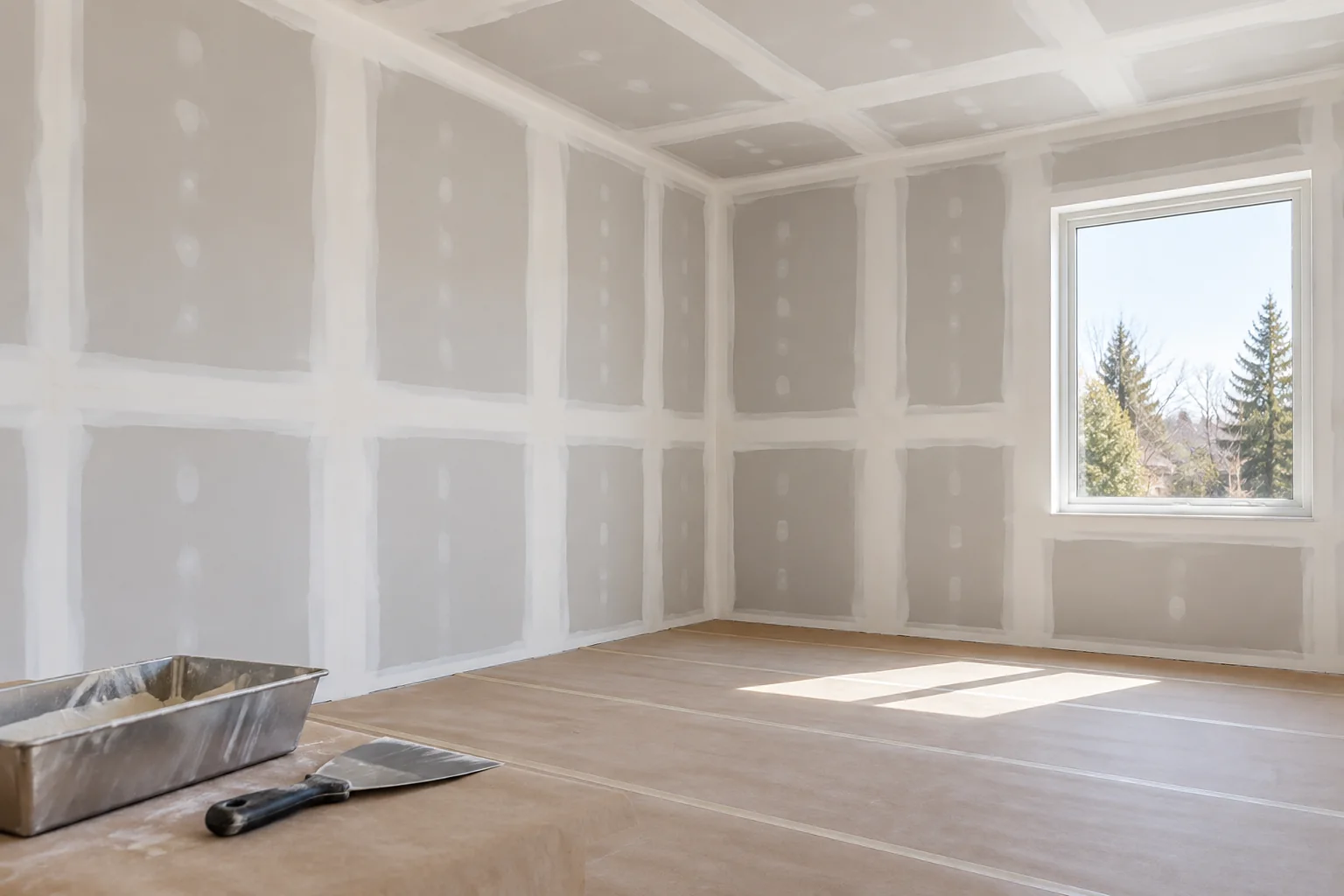
Fresh board is only the beginning of a finished wall. Seams, fasteners and corners need a planned finishing sequence, and the expected result should suit the room's lighting and final sheen. We scope drywall taping, mudding and sanding for residential and commercial interiors.
The scope comes first
Know what goes into the work.
Joint treatment, compound, sanding and primer preparation for a more consistent painted surface.
- Review of the board and requested finish standard
- Agreed joint taping and corner treatment
- Compound application to specified joints and fasteners
- Feathering, sanding and surface review
- Defined preparation for primer and paint
- Work-area protection and cleanup within the scope
From surface to finish
Preparation with a purpose.
Check the board and expectations
Review fastening, joints, gaps, corner details and previous work. Agree on the desired finish and discuss strong side lighting or glossy finishes before joint treatment starts.
Treat joints and corners
Use a compatible tape and compound system to reinforce the joints. Address fasteners and corner accessories as part of the same surface rather than treating seams alone.
Build and feather the finish
Apply successive compound passes as needed, widening transitions instead of leaving ridges. Follow the compound's setting or drying requirements between stages.
Sand, inspect and prime
Smooth the completed work carefully, remove sanding residue and inspect the surface before decoration. A suitable primer helps prepare board and compound for the final paint system.
Planning your project
What affects your quote?
A quote should reflect the condition and complexity of your space. We assess these factors before confirming pricing.
- Board area, joint layout and ceiling work
- Condition of installed board and earlier finishing
- Corners, bulkheads and architectural details
- Lighting, final sheen and agreed surface finish
- Compound drying conditions and site access
Related services
Local painting information
See how location, access and property considerations shape the work.
Questions about taping & finishing.
What is the difference between taping, mudding and sanding?
Taping reinforces joints; compound fills and blends seams, fasteners and corners; sanding smooths the completed finishing work. These stages work together and should be followed by suitable primer preparation.
Is primer needed on new drywall?
The paint system needs to suit the board and joint compound. A suitable primer helps manage their different absorption before the finish coat; the specified product and preparation are included in the painting scope.
Why can seams show under certain lighting?
Light travelling across a wall can reveal small changes in its plane, and higher sheen can make them more noticeable. We discuss lighting and finish expectations early; a broader finishing treatment may be appropriate.
Can you finish drywall installed by another contractor?
Yes, after reviewing the board condition, fastening, joints and site readiness. Any corrections needed before finishing are identified separately rather than hidden under compound.
Let’s plan the right finish.
Tell us about your space. We’ll help define the preparation, finishes and next steps.