
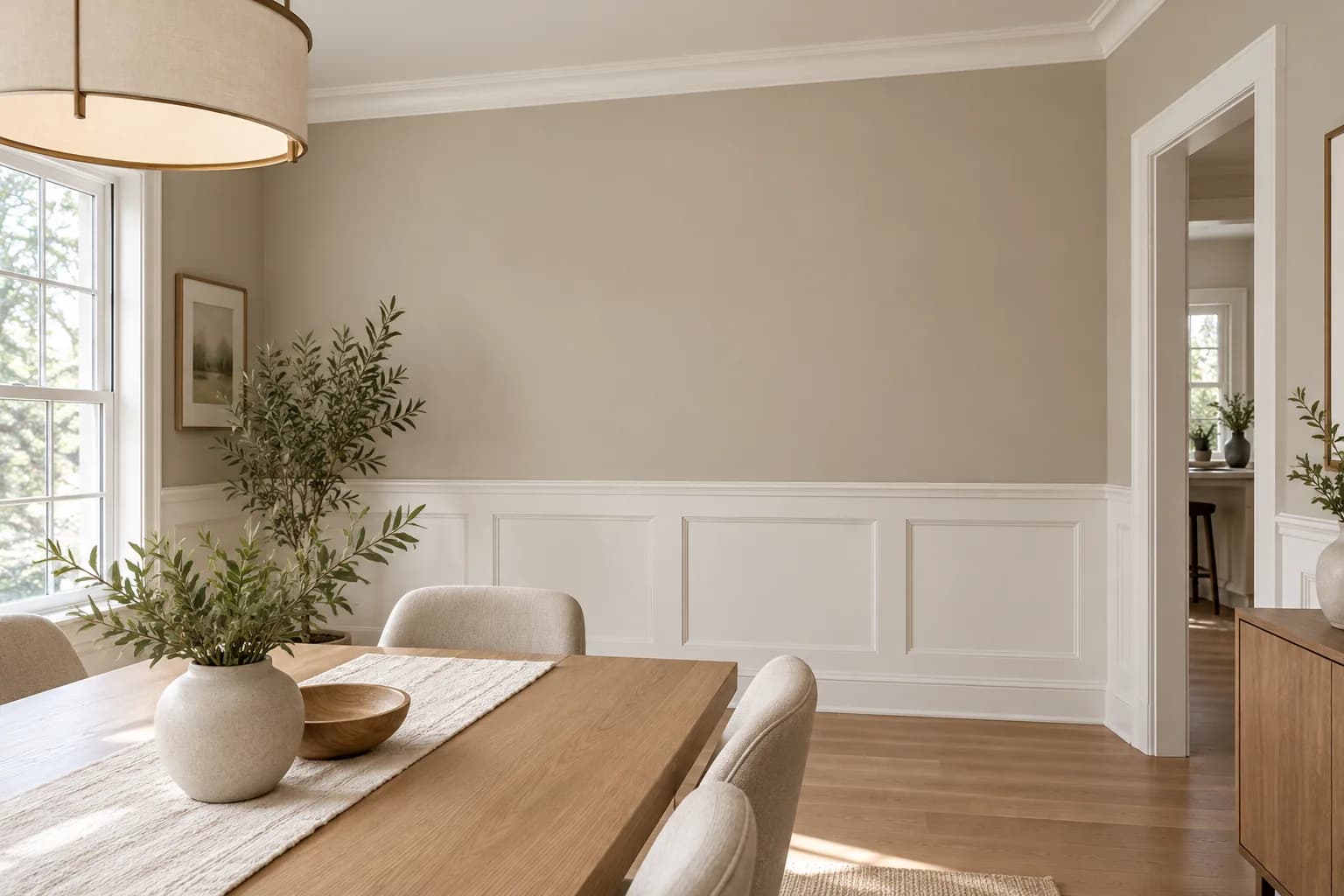
Floor area does not describe every painted surface
A home's floor area can help describe its size, but walls, ceilings, doors, frames and baseboards are separate surfaces. Ceiling height, stairwells and the number of rooms also change the scope. An estimate for walls alone cannot be compared directly with a complete interior repaint.
Benjamin Moore's paint calculator uses room dimensions, doors and windows to estimate paint quantity. It describes its output as approximate and excludes ceilings. A material-quantity calculator is useful for planning; it is not a contractor's labour or total-project quote.
Preparation needs its own description
Small dents, damaged joints, peeling coatings and widespread unevenness are different preparation problems. Ask what repairs are included, which areas need primer and whether a broader skim coat or drywall replacement is a separate item.
Manufacturer guidance makes surface assessment, cleaning, appropriate smoothing and priming part of coating preparation. The price should make that work visible. A lower total may simply describe fewer repairs or fewer included surfaces.
Products and finish choices matter
Record the proposed primer and finish product, colour and sheen for each surface. Walls, cabinets, exterior wood and other materials may need different systems. Ask how the proposed finish suits the surface and the way the space is used.
The written scope should describe the intended coating application and coverage. A dramatic colour change, difficult existing finish or exposed substrate may need a different approach from a straightforward repaint. Confirm those assumptions before choosing between quotes.
Access and occupancy affect the plan
An empty room and an occupied office create different logistical needs. Furniture, high areas, parking, equipment access, room sequence and business restrictions should be discussed during assessment. Exterior work also needs suitable application conditions for the selected product.
If you have a move-in, listing or tenant deadline, give the date with your request. Ask what schedule is feasible for the assessed scope rather than assuming that a smaller floor area guarantees a faster completion.
Compare the same scope before comparing the price
Put each quote beside the same surface list. Identify missing items and ask for clarification in writing. Confirm whether materials, protection, agreed repairs, cleanup and applicable tax are included, and how additional work would be approved.
- Rooms, elevations and every included wall, ceiling, door and trim surface.
- Preparation and repairs, including any stated limits.
- Primer, finish product, colours, sheen and application scope.
- Protection, access, furniture responsibilities and work sequence.
- Exclusions, change approvals, cleanup and final review.
What to send with a quote request
Provide your city, project type, surfaces, approximate room sizes, known damage and preferred timeframe. Mention whether the property will remain occupied. Photos can help describe the condition when an agreed secure way to share them is available; an on-site assessment may still be needed.
This guide does not publish an Ontario market-average price. A responsible total needs a defined scope and current project-specific assessment. Ask BYOUT PAINTING to review the work you have in mind in Niagara, Hamilton or Halton.
Plan the work in your space
Explore our painting services, find your local service area, or tell us about your project.