Confirm the work area before clearing the room
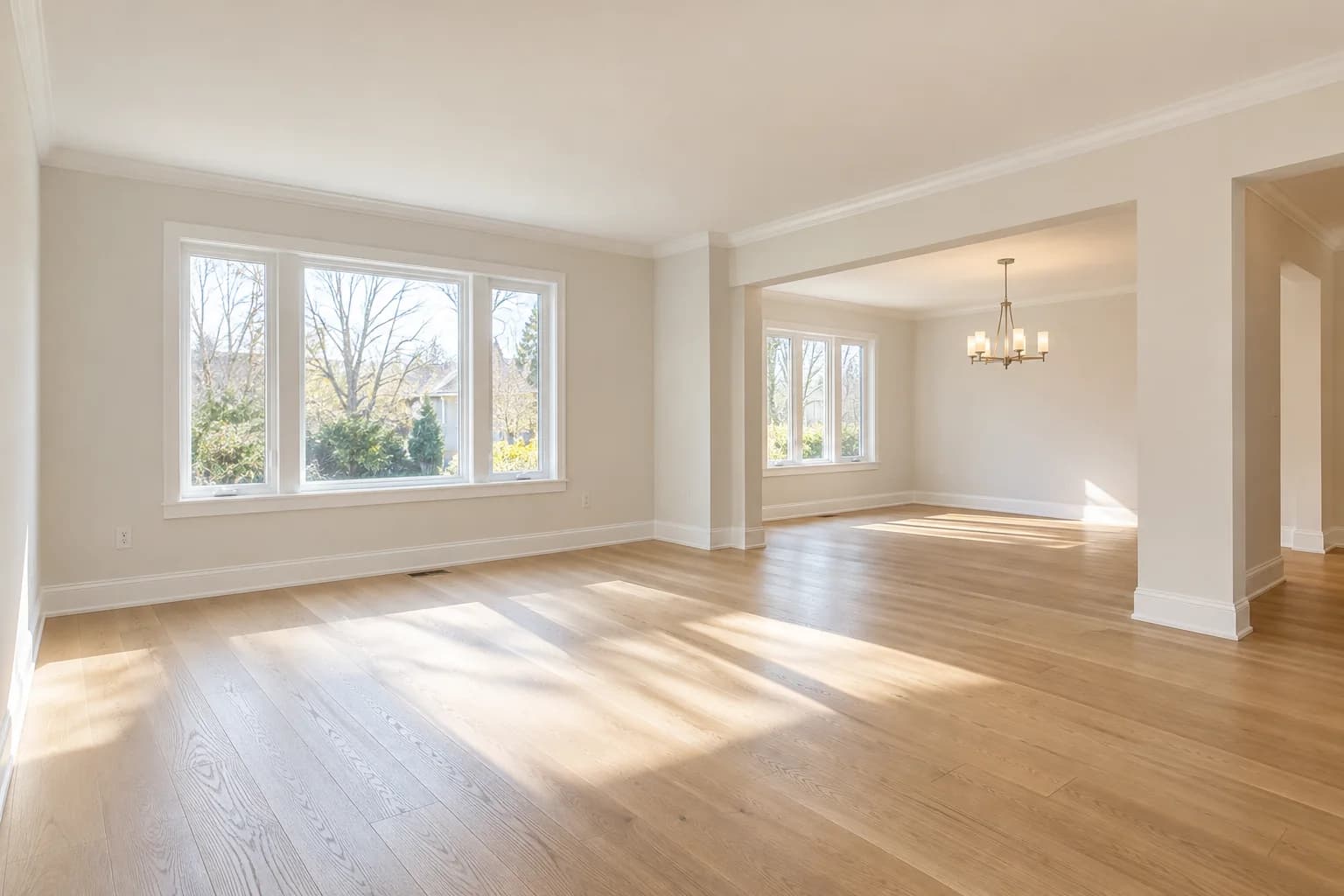
Check whether the quote covers walls only or includes ceilings, trim, doors and closets. Ask about the room sequence and access needed around each surface. Clearing one room properly is more useful than moving belongings into the next room scheduled for painting.
Confirm colour and sheen decisions before the project begins. If you are still choosing, ask how and when samples should be reviewed so a late change does not alter the agreed scope unexpectedly.
Move small items and agree on larger furniture
Pack artwork, fragile objects, valuables and everyday items from the work area. Keep them in a room that will remain accessible. Agree on the handling of curtains, blinds and other fittings instead of assuming removal and reinstatement are included.
Benjamin Moore's room-preparation guidance recommends clearing furniture where practical and covering what remains, along with floor protection. For a professional project, decide who moves heavier items and whether there is enough working space around furniture that stays. Avoid moving a large item without the help it needs.
- Remove loose belongings, artwork and breakables from the agreed work area.
- Confirm responsibility for large furniture, window coverings and fittings.
- Keep entrances, stairs and agreed work routes clear.
- Store important daily items outside rooms temporarily out of use.
Leave surface preparation to the agreed scope
Tell the painters about stains, recurring cracks, loose coatings or previous repairs. Share what you know about their history. A visible patch may need more than paint, and a recurring damp mark needs its cause assessed before it is treated as a cosmetic repair.
Ask before washing, filling or sanding surfaces yourself. Manufacturer preparation guidance calls for suitable cleaning, removal of residue, dry surfaces and appropriate priming. The team needs to know the condition it is assessing and the materials already applied.
Plan around the household
Discuss rooms you need to keep using, working-from-home needs, pets and access arrangements. Agree on where belongings can remain and how household members will avoid the active work area. A clear plan helps everyone know what will be available each day.
Ask about suitable ventilation, room access and when surfaces can be handled or cleaned. Drying, recoating and curing instructions depend on the selected products and conditions; a surface that feels dry is not an invitation to resume every use immediately.
Use a short pre-start check
Before work begins, walk through the agreed rooms together. Confirm surfaces, colours, repairs, protection, access and any items that will stay untouched. Keep one contact person available for scope questions and agree how unexpected issues will be approved.
For a BYOUT PAINTING enquiry, describe the rooms, whether the home remains occupied and your preferred timeframe. Preparation responsibilities and scheduling should be confirmed for your particular project.
Plan the work in your space
Explore our painting services, find your local service area, or tell us about your project.