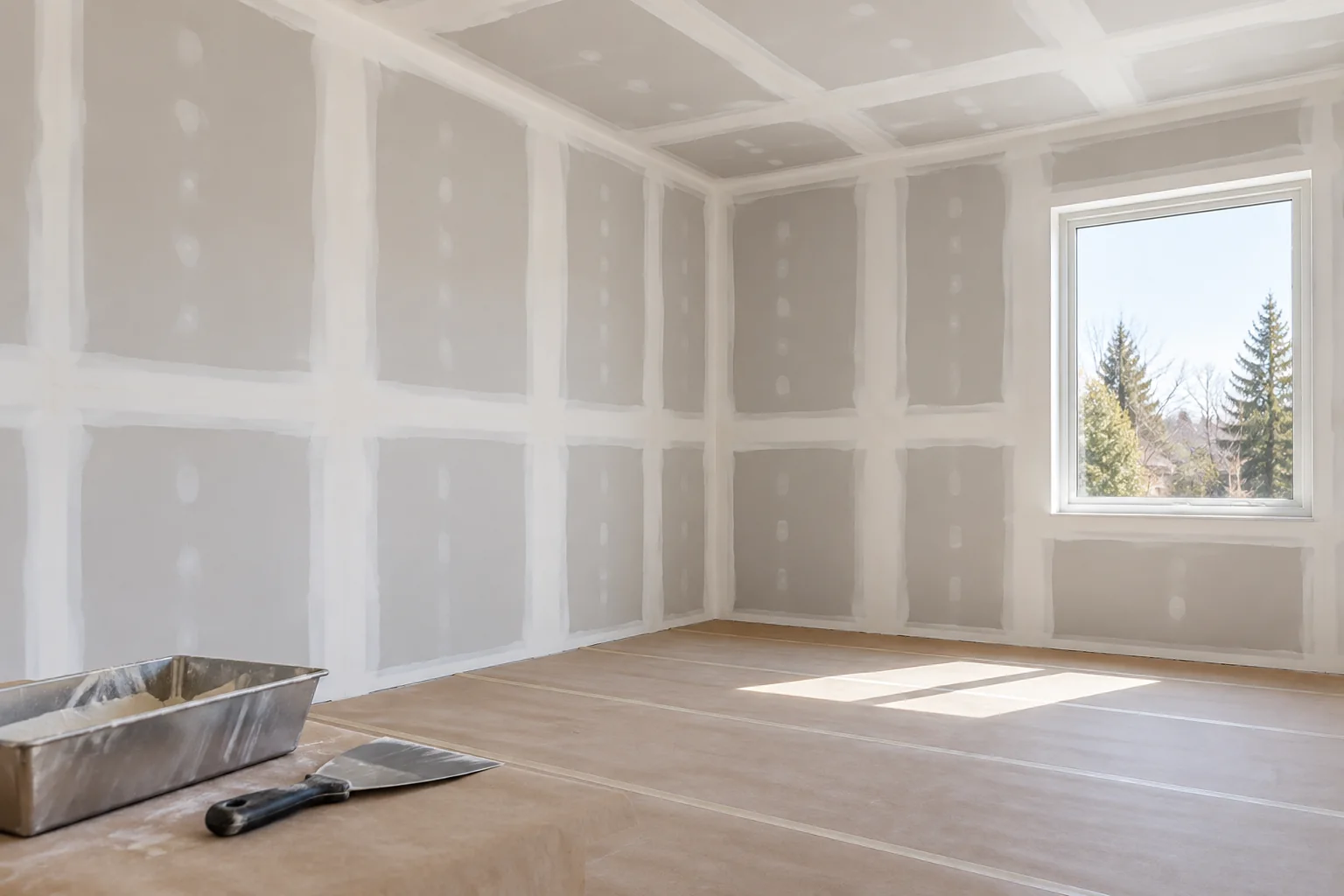
Taping and mudding have different jobs
Taping embeds reinforcing tape in a compatible joint compound at the relevant joints and corners. Mudding applies compound over the treated areas and fasteners to fill and smooth their transitions. These stages work together; simply covering a joint with paint does not perform the same work.
USG distinguishes compounds for taping, topping and all-purpose use. Products have different application and sanding characteristics. The selected tape, compound and corner treatment need to work as a system, following their manufacturer instructions.
The finish should be agreed before work starts
Ask whether the scope is a new-board finish, repair of existing joints or a broader surface improvement. CGC's finishing handbook explains that the intended decoration and the type and angle of lighting affect the required finishing level. Light across a wall and reflective finishes can make variations easier to notice.
A full-surface skim coat is a different scope from treating joints alone. Discuss the intended paint, room lighting and appearance expectations rather than relying on an undefined promise of a perfectly smooth wall.
Several stages need time and inspection
A finishing plan addresses joints, fasteners and agreed corner details, then builds a smooth transition through appropriate compound application. The products and site conditions determine when the next stage can proceed. Ask about the sequence and readiness checks instead of choosing a completion date from floor area alone.
Large gaps, poorly supported boards, damaged panel faces and recurring cracks may need separate attention. Identify those issues at assessment so that the finishing scope does not quietly inherit unquoted installation or repair work.
Sanding is followed by preparation for paint
Sanding refines the treated surface; it should not damage the drywall face paper. CGC's guidance treats the preparation and decoration stages together, including a suitable drywall primer before the specified finish. Dust and remaining defects should be addressed before coating.
Primer is part of a selected coating system, not a replacement for correcting a ridge or damaged joint. Benjamin Moore offers a drywall-specific primer for drywall and plaster. The appropriate product for a particular surface still needs to be chosen after assessment.
Questions to put in your scope
Keep installation, finishing and painting responsibilities clear, especially when different trades are involved. Ask what condition the boards must be in before finishing begins and who reviews the completed surface before paint.
- Which walls, ceilings, joints, fasteners and corner details are included?
- What finish is appropriate for the planned paint and lighting?
- Is a full-surface skim coat included or a separate item?
- Are sanding, dust cleanup, primer and painting in this quote?
- How will damaged boards or additional repairs be approved?
Describe the surface you have
For a quote, identify whether you have new drywall, a repaired area or an existing wall that needs improvement. Include the rooms, ceiling height, known damage and intended finish. BYOUT PAINTING can assess the preparation and finishing scope for your Niagara, Hamilton or Halton project.
Plan the work in your space
Explore our painting services, find your local service area, or tell us about your project.